Men’s Haircuts 2026: 15 Trending Hairstyles, Styling Tips and 2027 Predictions
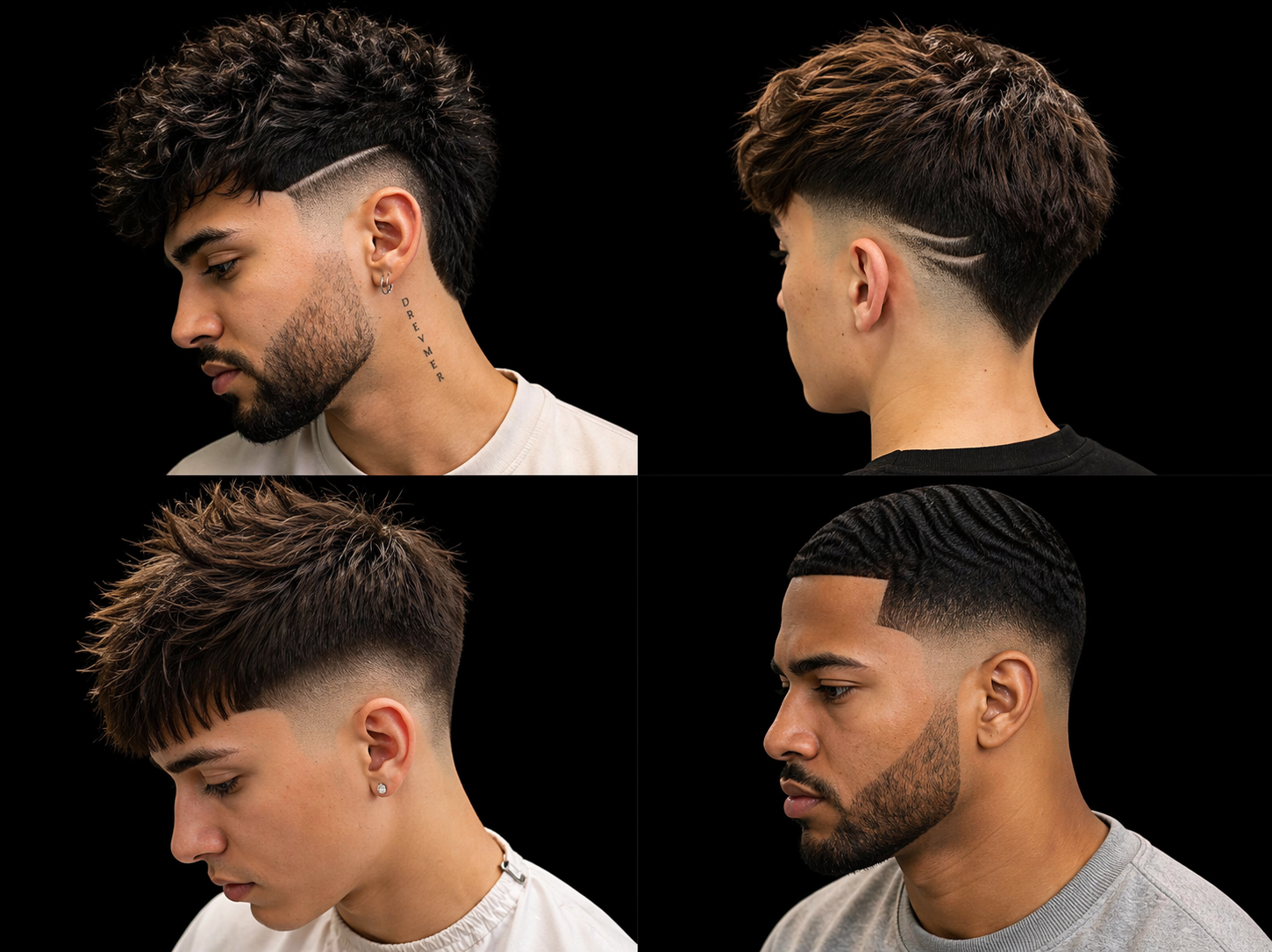
Discover the best men’s haircuts for 2026, from low taper fades and textured crops to slick backs and modern mullets. Explore styling tips, products and men’s hair trends predicted for 2027.
1. The biggest men’s haircut trends in 2026
One of the clearest themes in men’s grooming this year is the balance between precision and natural movement. Traditional barbering remains important, but many modern cuts combine clean outlines and carefully blended sides with a softer, more textured top.
In its 2026 trend coverage, GQ identifies several directions worth watching, including updated 1990s hairstyles, manageable mullets, tailored buzz cuts, side parts and swept-back styles.
Here are the main styles worth understanding before choosing your next haircut.
Low taper fade
Versatile
A subtle fade around the temples and neckline, usually paired with a longer top. It is an excellent choice for men who want a clean appearance without an aggressively short finish.
Textured crop
A short, layered top with a natural or forward-directed fringe. This cut creates definition and is particularly practical for men who prefer a relatively quick styling routine.
Modern slick back
Hair is directed backwards with controlled volume and a polished or natural finish. The modern version can be less rigid than the traditional slick back, allowing some movement.
Soft modern mullet
Shorter sections at the front and sides blend into a longer back. Contemporary versions generally aim for wearable proportions rather than an exaggerated contrast.
Curtains and middle part
A centre-parted style with longer front sections framing the forehead. It is especially suitable for men who want more length and natural movement.
These styles are not equally suitable for every person. Hair density, growth direction, natural texture and the amount of daily styling all affect the final result.
2. Low taper fade: The understated men’s haircut
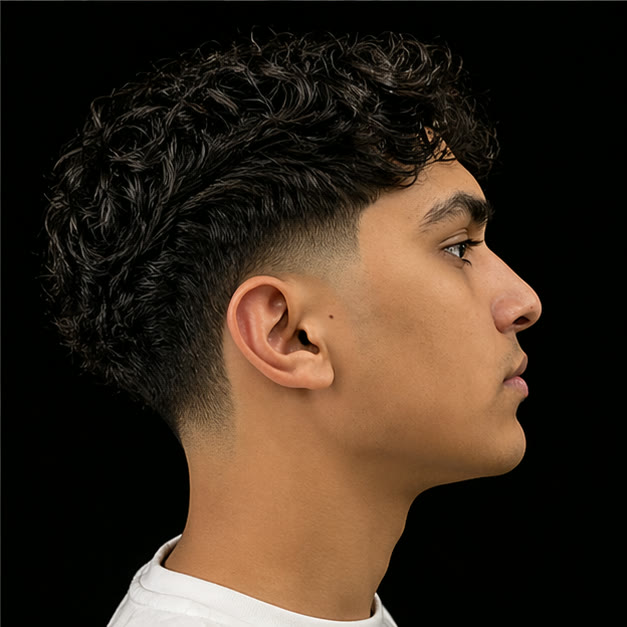
The low taper fade is one of the most adaptable choices for men who want a contemporary haircut that remains appropriate for work, social occasions and everyday life.
Unlike a high skin fade, the transition happens closer to the temples and neckline. This leaves more of the sides visually intact and creates a softer overall silhouette.
What makes the low taper fade different?
A taper gradually shortens the hair around specific areas, particularly the sideburns and neckline. A fade usually describes a more extensive graduation in which the hair becomes progressively shorter over a larger section of the sides.
In everyday barbering, the terminology can overlap. Therefore, showing your barber a reference photograph is often more useful than relying on the name alone.
The low taper can be combined with a textured crop, curls, a side part, a quiff or medium-length hair on top.
Who does it suit?
• Men who want a clean haircut without exposing too much scalp.
• Men with straight, wavy, curly or coily hair, provided the top is shaped appropriately.
• Men who prefer a professional appearance that can also look relaxed.
• Men growing out their hair who want to keep the outline controlled.
For rounder faces, additional height on top can create a longer visual profile. For longer faces, a flatter top and a little more width at the sides may create better balance. These are guidelines, not strict rules.
How to style it
• Wash your hair and towel-dry it until damp.
• Apply a small amount of lightweight styling cream or sea salt spray if you need extra grip.
• Blow-dry the top in the direction you want it to sit.
• Use a small amount of matte clay or paste to define the ends.
• Keep the sides relatively product-free so the fade looks clean rather than greasy.
Recommended products
Matte clay
Best for: texture and medium-to-strong hold.
Helps separate strands and maintain a natural finish. Start with a pea-sized amount and add more only if needed.
Sea salt spray
Best for: volume and grip.
Useful as a pre-styler for hair that needs more lift. It does not replace a finishing product when stronger hold is required.
Maintenance
A taper generally looks sharpest when the sideburns and neckline remain tidy. Depending on how quickly your hair grows and how precise you like the outline, a refresh every two to four weeks may work well.
What to tell your barber: “I’d like a low taper around the temples and neckline, keeping the top long enough for natural texture. Please keep the blend soft rather than taking the fade too high.”
3. Textured crop and French crop
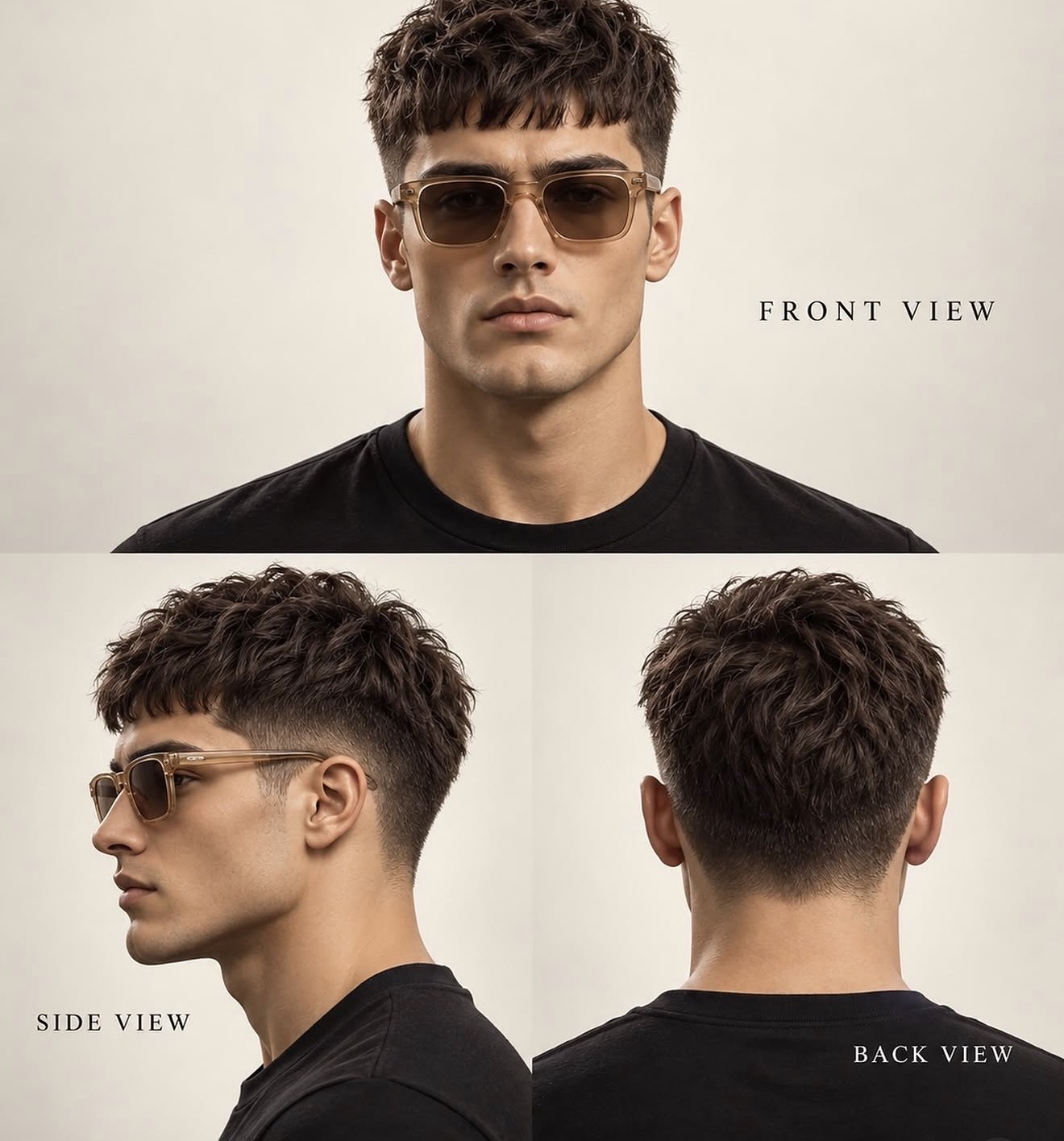
The textured crop remains a practical option for men who want a contemporary look without committing to a long, complicated styling routine. Its appeal comes from the contrast between a relatively short top, a deliberately textured finish and neatly shaped sides.
The French crop is a related style, typically featuring a more defined fringe that falls forward across the forehead. A textured crop can have a softer, more irregular fringe and additional movement on top.
Why choose a textured crop?
This haircut can help fine hair look more substantial by breaking up the surface into smaller sections. It can also make thick hair easier to manage when the barber removes bulk in the right places.
The important distinction is that texture does not simply mean making the hair messy. Good texture depends on the correct length, sectioning and cutting technique.
Who does it suit?
The textured crop is particularly useful for men who:
• Want a short-to-medium haircut that is easy to maintain.
• Prefer a matte finish over a glossy, combed appearance.
• Have straight or slightly wavy hair.
• Want a fringe that can soften the appearance of a larger forehead.
Men with very curly hair can also wear a crop, but the barber should account for shrinkage and the way curls spring up when dry.
How to style a textured crop
Start with nearly dry hair. If you want more height, blow-dry the roots while lifting the hair with your fingers. Work a small amount of matte paste or clay between your hands, then apply it through the top.
Direct the fringe forward or slightly to one side. Finish by separating a few sections with your fingertips rather than combing everything into one uniform shape.
Avoid using too much heavy product. Fine hair can lose its volume, while thick hair can look stiff and overly sculpted.
Recommended products
• Matte paste: for flexible definition and a natural-looking finish.
• Matte clay: for stronger hold and separation, especially on thicker hair.
• Volumising powder: for extra root lift when fine hair tends to fall flat.
Maintenance
Most short crops benefit from a trim every three to five weeks. The exact interval depends on the fade, fringe length and how quickly the hair grows.
What to tell your barber: “I’d like a textured crop with a natural, broken-up fringe. Keep the top easy to style and make sure the sides blend into the shape rather than overpowering it.”
4. Slick back: The modern classic
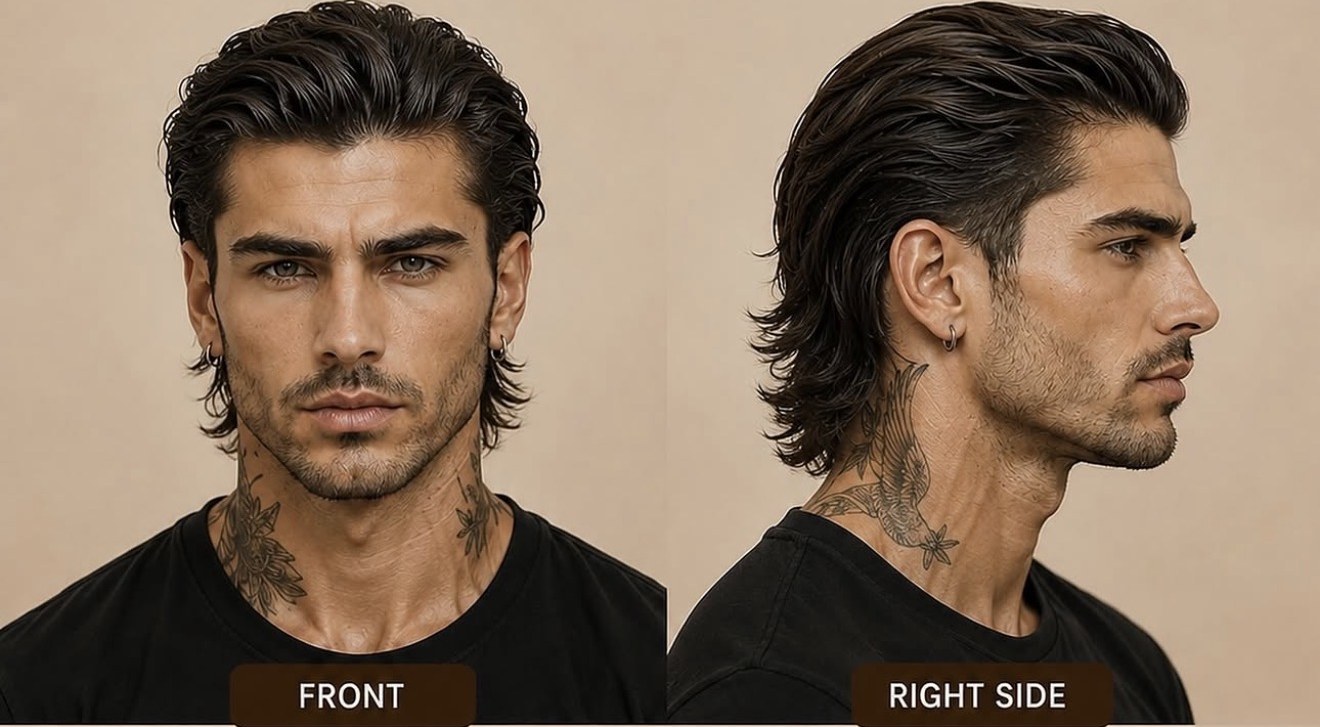
The slick back is one of the most recognisable men’s hairstyles because it can look elegant, structured and timeless. In 2026, a softer approach makes the style easier to adapt to modern casual wardrobes.
Rather than flattening every strand against the scalp, a modern slick back can preserve root volume and a little separation. It can be worn with tapered sides, a low fade or longer scissor-cut sides.
GQ’s 2026 trend coverage also highlights the return of mid-length swept-back styles and glossier finishes as part of a more tailored men’s aesthetic.
Who does it suit?
Men with straight or wavy hair often find this style straightforward to manage, provided the hair is long enough to stay directed backwards. Thick hair may need additional control, while fine hair often benefits from a lighter product that does not collapse the roots.
A receding hairline does not automatically rule out a slick back, but pulling the hair tightly away from the forehead can make the hairline more prominent. A textured, less rigid version may be a better option for some men.
How to style a slick back
• Begin with clean, damp hair.
• Apply a small amount of pre-styling cream or heat protectant if blow-drying.
• Blow-dry backwards, lifting the roots slightly for volume.
• Use a comb for a neat, defined finish or your fingers for a looser look.
• Apply pomade in small amounts, working from the back towards the front.
• Refine the shape without flattening all the volume.
Which product should you use?
Water-based pomade
Best for: a smooth, controlled finish.
Choose a medium or strong hold according to how resistant your hair is. A shinier pomade creates a traditional slick back, while a low-shine version looks more understated.
Styling cream
Best for: a softer, more natural slick back.
Useful for controlling flyaways while preserving movement. It may not provide enough hold for very thick or stubborn hair on its own.
Common mistakes
The most common mistakes are applying too much pomade, combing the hair flat before creating volume, and trying to force the hair backwards when it naturally grows forward.
What to tell your barber: “I’d like a modern slick back with enough length on top to sweep backwards. Keep the sides neat but not excessively short, and leave some natural volume rather than making it look flat.”
5. Mid fade and high fade
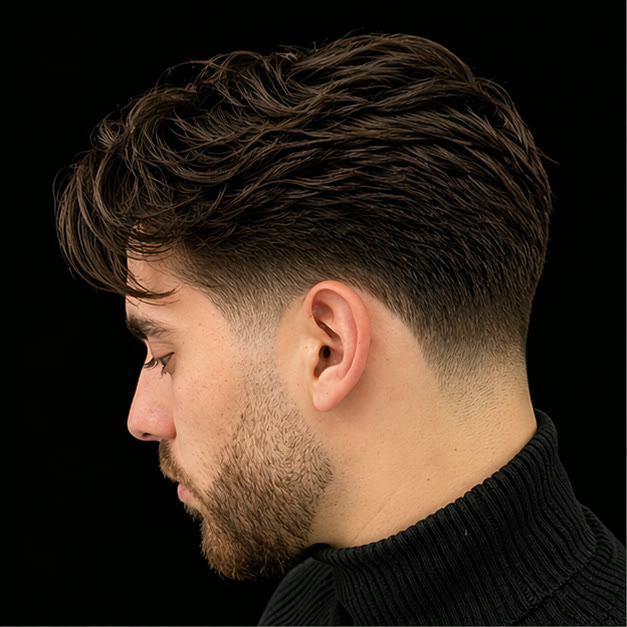
Fades remain an important part of contemporary men’s barbering. Their popularity comes from the precision of the blend and the ability to combine the same basic technique with very different tops.
The difference between a low, mid and high fade is mainly the point at which the graduation begins and how high it extends up the head.
• Low fade: subtle, lower on the head and generally more understated.
• Mid fade: begins around the middle of the sides, creating a clear but balanced contrast.
• High fade: rises higher towards the temples and produces a stronger, more dramatic effect.
A skin fade takes the hair down to the skin at the shortest point. A shadow fade retains a little hair and creates a softer, darker transition.
Which fade should you choose?
A mid fade is a versatile choice for men who want visible contrast without an extremely high transition. A high fade can create a bold, athletic appearance and works particularly well with certain crops, buzz cuts and textured tops.
Men with prominent temples or a very narrow head shape may prefer a softer blend. The barber should consider the head’s natural shape rather than simply applying the same fade height to every client.
Styling a fade
The sides generally require little styling product. Most of the work happens on top.
For a textured top, use matte clay. For a defined quiff, blow-dry the front upwards and use a product with stronger hold. For curls, use a lightweight curl cream and avoid brushing the finished hair dry.
Maintenance
Skin fades show regrowth quickly. Some men prefer a touch-up every one to two weeks, while others are comfortable leaving the cut for three or four weeks.
A fade is not a complete hairstyle on its own. The top, fringe, side profile and neckline must work together to create a balanced result.
What to tell your barber: “I’d like a mid fade with a smooth transition and a top that suits my natural texture. Please show me where the fade will start before taking it higher.”
6. Modern pompadour and textured quiff
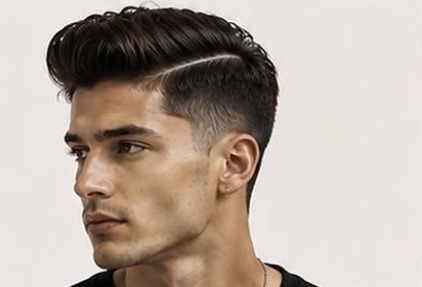
The pompadour and quiff both create height at the front, but their shapes differ. A traditional pompadour usually sweeps the hair up and back in a more continuous, rounded shape. A quiff can be shorter, more irregular and easier to wear casually.
The modern versions tend to favour controlled volume instead of the exaggerated, rigid shapes associated with some older styles.
Who does it suit?
These styles can work particularly well for men with straight or wavy hair and enough length at the front to create lift. Thick hair may require internal weight removal, while fine hair needs a careful balance between volume and product weight.
Men with longer face shapes should be cautious about adding too much height, as excessive vertical volume can make the face appear longer.
How to style it
Use a blow-dryer to lift the roots at the front. Direct the airflow upwards and slightly backwards, then allow the hair to cool before applying your finishing product.
For a natural quiff, use matte paste or clay. For a more traditional pompadour, use a pomade with enough hold to preserve the curved shape.
A small amount of hairspray can help in windy conditions, but it is not always necessary.
Maintenance
Expect to trim every three to five weeks, depending on how much volume you want to preserve. The front should remain long enough to style without becoming difficult to control.
What to tell your barber: “I’d like a modern quiff with natural volume, a textured finish and sides that complement my head shape. I don’t want the top to look excessively stiff or over-styled.”
7. Buzz cut and crew cut
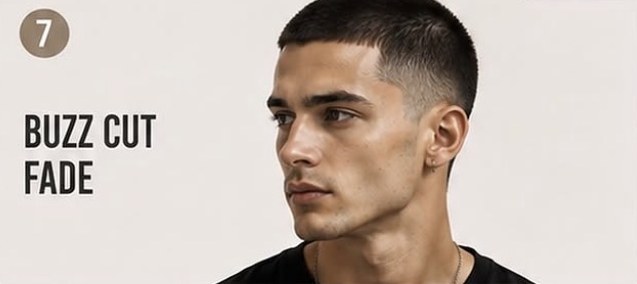
For men who want simplicity, short hair remains a strong option. The buzz cut and crew cut are often grouped together, but they create different results.
A buzz cut is generally very short across most or all of the head. A crew cut leaves the hair longer on top, often with a little extra length at the front.
GQ’s 2026 coverage identifies tailored buzz cuts as an enduring trend, with modern versions incorporating precise outlines, fades and customised lengths.
Why short hair works
Short cuts require little daily styling and can make a grooming routine much simpler. They also put more emphasis on the hairline, scalp, head shape and facial hair.
A buzz cut does not automatically suit every man in the same way. Differences in head shape, scalp marks, hair density and the position of the hairline affect the final appearance.
Styling and products
Most buzz cuts need no styling product. A crew cut may benefit from a small amount of matte paste to define the front or create a slightly textured finish.
Use shampoo suited to your scalp, and remember that a very short haircut exposes more of the scalp to the sun. A suitable sunscreen or head covering is sensible during prolonged outdoor exposure.
Maintenance
A very short buzz cut can need refreshing every one to three weeks to preserve its length. A crew cut may remain presentable for three to five weeks, depending on its shape.
What to tell your barber: “I’d like a short, tailored buzz cut with a clean outline and a subtle taper. Please recommend a guard length that works with my hair density and head shape.”
8. Modern mullet and wolf-inspired men’s cuts
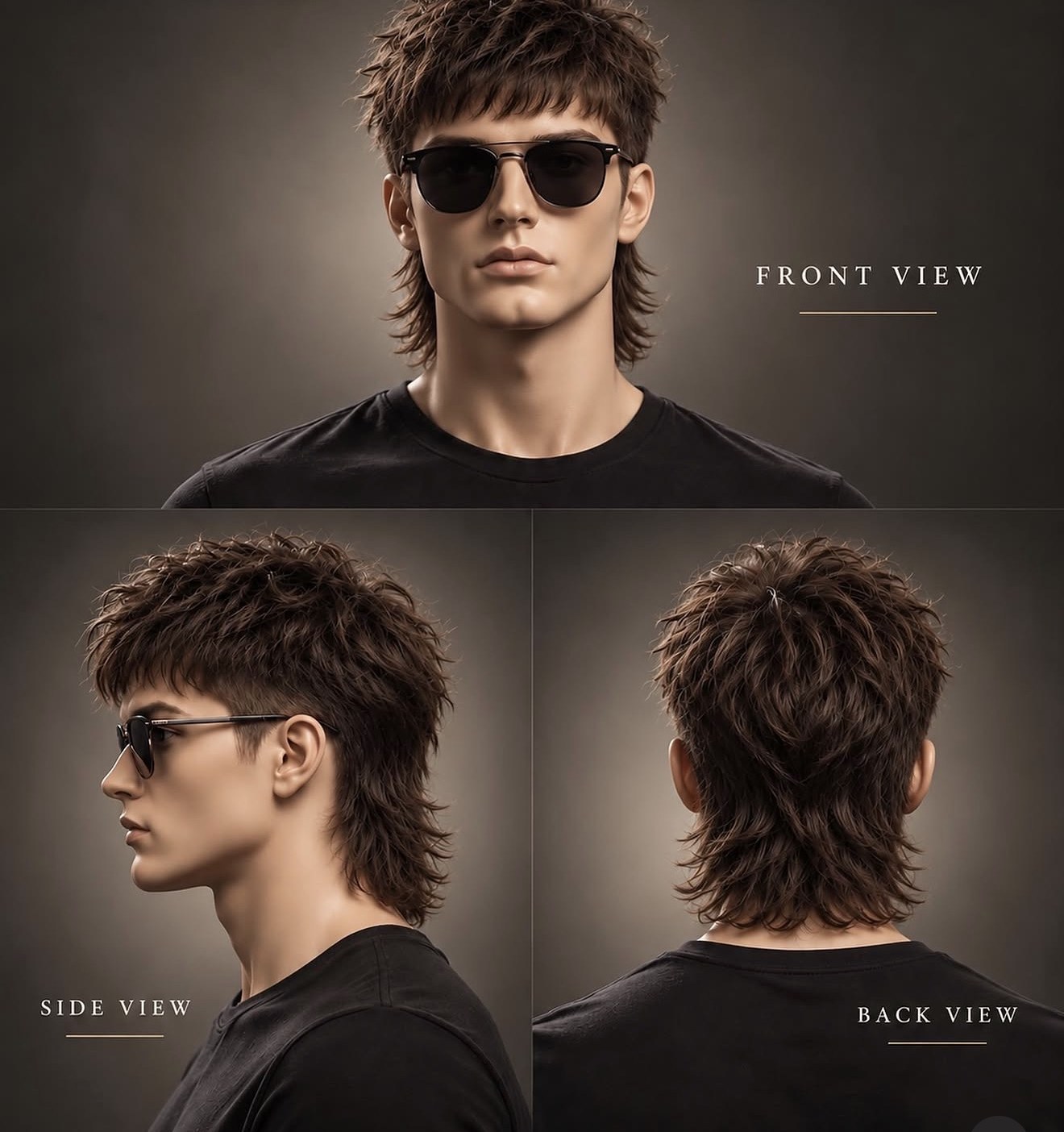
The modern mullet is one of the more expressive men’s haircut trends of 2026. Unlike the exaggerated versions associated with previous decades, a contemporary mullet can be softer, more layered and easier to incorporate into everyday life.
GQ’s reporting describes a move towards manageable mullets with natural movement rather than sharply disconnected shapes.
A wolf-inspired cut shares some of the mullet’s layered character but often has more volume around the crown, a shaggier outline and a less defined separation between the top and back.
Who should consider it?
Men with wavy or curly hair can benefit from the movement created by longer layers. Straight hair can also work, but the cut may require additional texture or styling to prevent the shape from looking flat.
This style is more of a statement than a traditional taper. It may be ideal for men who enjoy fashion-led looks, creative environments or a haircut that stands out.
How to style it
Apply a lightweight styling cream or sea salt spray to damp hair. Scrunch or shape the hair with your fingers, then air-dry or use a diffuser on a low setting if your hair is naturally wavy or curly.
Avoid flattening the crown. The shape relies on movement, and too much heavy pomade can make the layers look greasy.
Maintenance
A mullet can be allowed to grow for longer than a skin fade, but the layers still need occasional shaping. A refresh every four to eight weeks can help maintain the intended silhouette.
What to tell your barber: “I’d like a soft, modern mullet with natural movement, blended sides and controlled length at the back. Please keep the shape wearable rather than making it too extreme.”
9. Curtains, middle part and the men’s bro flow
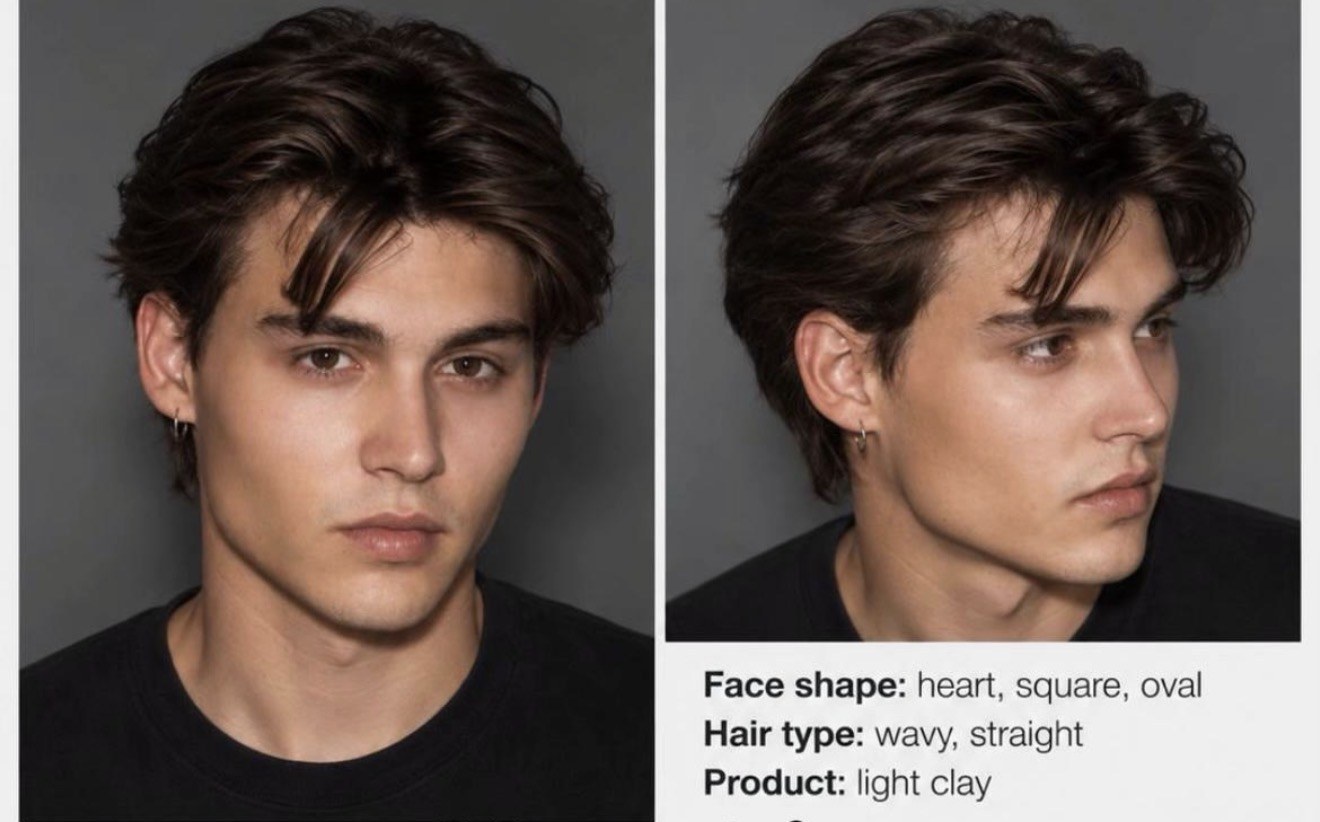
Men’s hairstyles inspired by the 1990s continue to influence contemporary grooming. The middle part, curtains and relaxed bro flow all offer alternatives to short, tightly faded haircuts.
GQ identifies centre parts and other 1990s-inspired looks among the key directions for men’s hair in 2026.
The curtains hairstyle has a defined parting, with the front sections falling towards either side of the face. The bro flow is generally longer and looser, often swept backwards or allowed to fall naturally around the ears.
Who does it suit?
These styles work best when there is enough length for the hair to fall into position. Straight hair can create a clean, defined middle part, while wavy hair adds natural movement.
Men with a strong cowlick at the front may need a different parting or extra length to make the style sit properly. It is worth allowing hair to grow gradually rather than expecting a short haircut to transform immediately into curtains.
How to style it
Use a lightweight leave-in conditioner or styling cream to control frizz. Blow-dry the hair away from the centre part, using your fingers or a vent brush to guide the front sections.
For more movement, apply a small amount of sea salt spray before drying. Finish with a light cream rather than a heavy clay if you want the hair to move naturally.
Maintenance
A medium-length cut may need shaping every six to ten weeks. Regular trims can remove unwanted bulk and keep the hair from developing an awkward shape as it grows.
What to tell your barber: “I’d like a medium-length centre part with soft layers and natural movement. Keep enough length around the front and ears so I can wear it parted or swept backwards.”
10. Classic side part and the refined business haircut
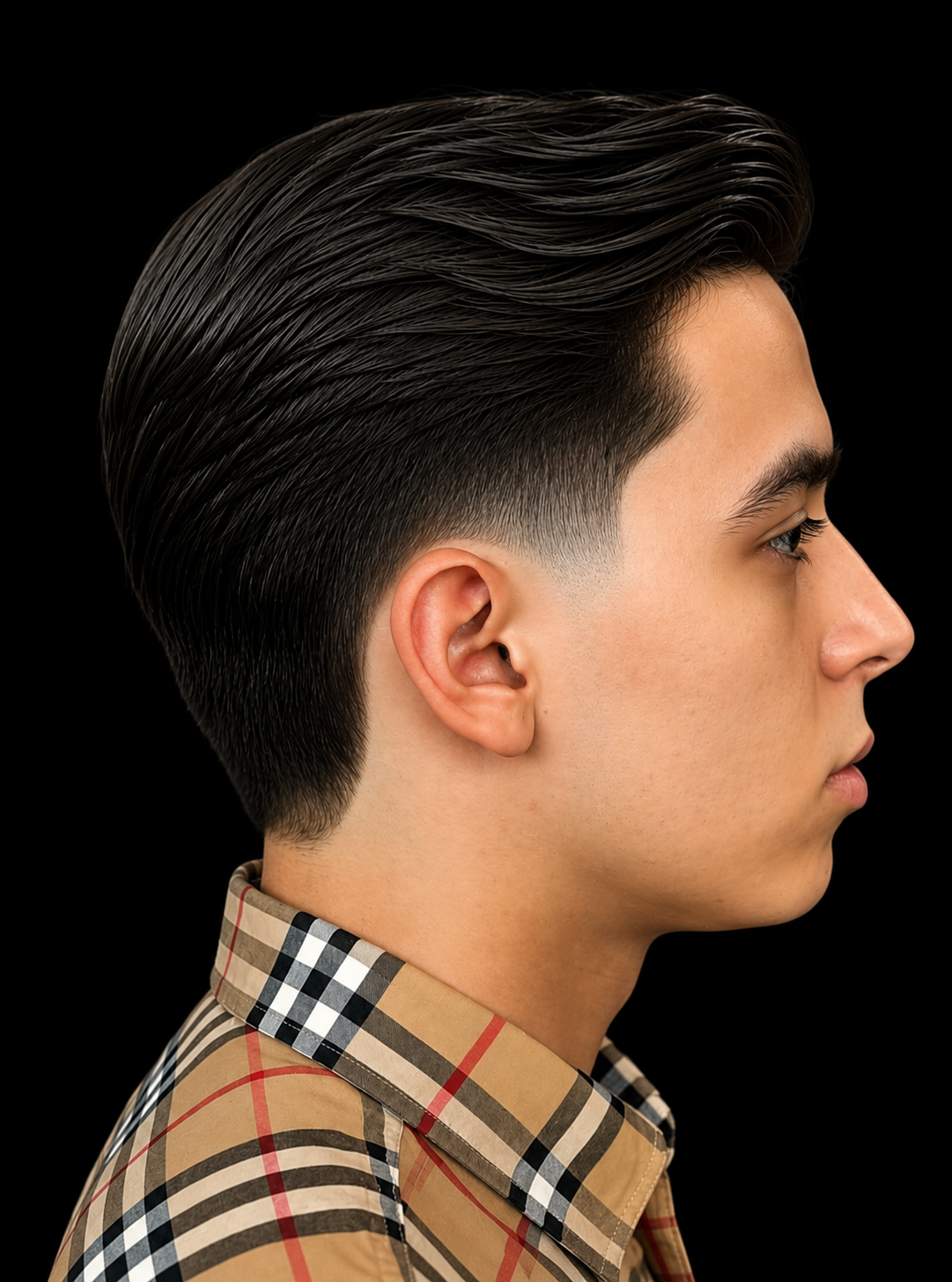
The classic side part is a dependable option for men who prefer a neat, structured haircut. It is suitable for business settings, formal occasions and everyday grooming.
In 2026, the style is being worn in several ways: sharply combed with a polished finish, softly parted with natural movement, or combined with a low taper and a longer scissor-cut top.
GQ’s trend reporting notes renewed interest in side parts and more tailored swept-back styles.
How to choose the right version
A defined side part works well for men who like a clear shape and a consistent daily routine. A softer part is more forgiving if your hair is thick, wavy or naturally resistant to combing.
The Ivy League is a related short style that leaves enough length at the front to create a subtle side part. It can be a good choice for men who want something shorter than a classic business haircut without committing to a buzz cut.
Styling routine
Towel-dry the hair and create the part while it is still slightly damp. Blow-dry in the intended direction, keeping the roots lifted if you want volume.
Apply a small amount of pomade for a polished finish or matte paste for a more understated result. Use a comb for precise definition, or your fingers for a looser, more contemporary appearance.
What to tell your barber: “I’d like a classic side part with a modern, natural finish. Keep the sides neatly tapered and leave enough length on top for a clean parting without excessive shine or stiffness.”
11. Curly and coily men’s haircuts
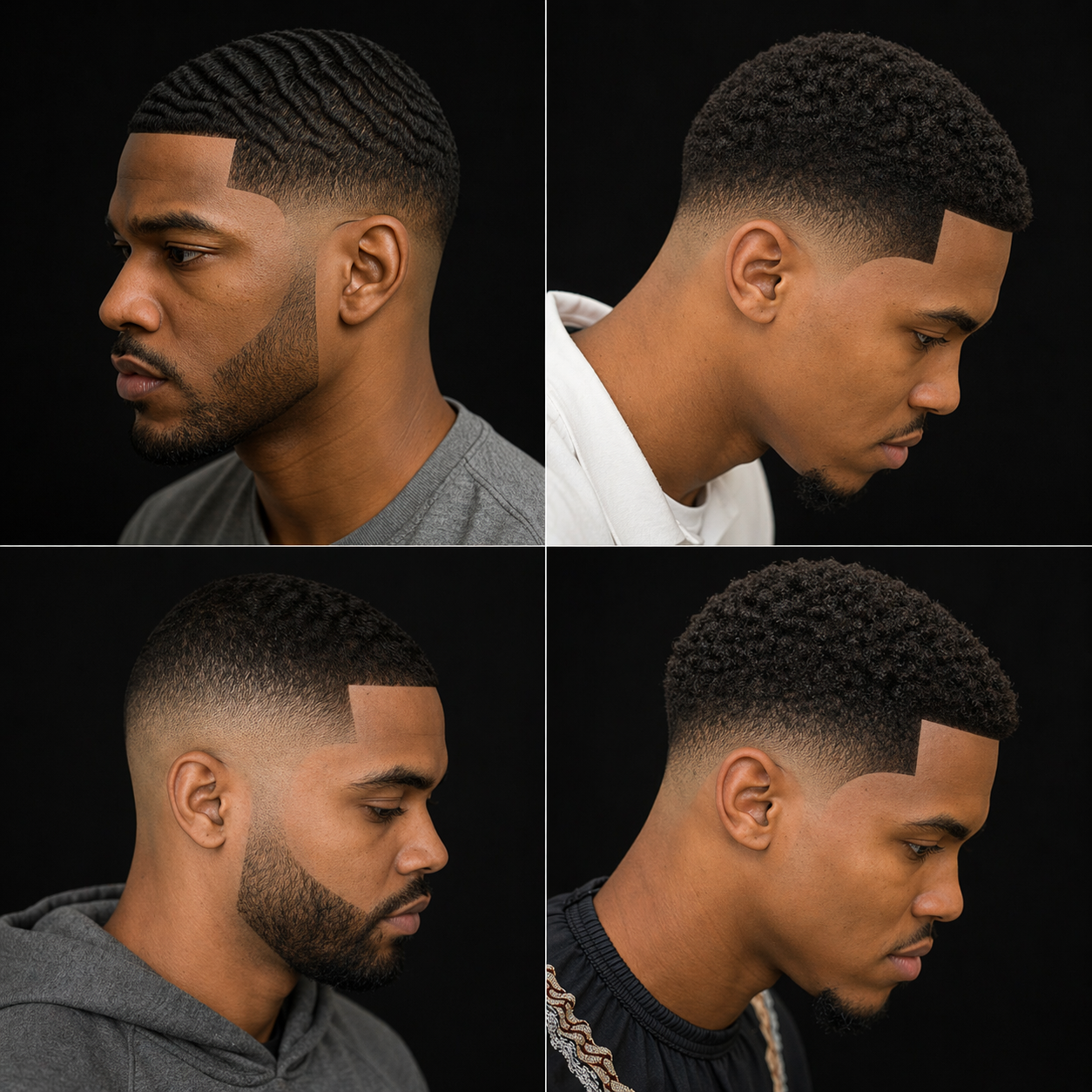
Curly and coily hair should not be treated as a variation of straight hair that simply needs a different product. Curl pattern, density, shrinkage and the way the hair expands when dry all affect how a haircut should be planned.
A low taper, curly crop, textured fringe or carefully shaped medium-length cut can all work well, depending on the client’s preferences and natural growth pattern.
What matters most?
The barber should understand how much shorter the hair appears when dry, how the curls group together, and where bulk needs to be removed. A cut that looks balanced while wet may appear significantly different after the hair dries.
Men with tighter curls may prefer a clean taper around the temples and neckline, while those with looser curls may choose a longer top with natural volume.
How to style curly hair
• Wash with a suitable shampoo and condition the hair regularly.
• Apply a small amount of leave-in conditioner or curl cream to damp hair.
• Shape the curls with your fingers rather than repeatedly brushing them.
• Air-dry or use a diffuser on a gentle setting.
• Avoid excessive product, which can weigh down curls and make the finish look greasy.
For a defined, natural finish, curl cream is often a better starting point than a strong-hold clay. For a short curly crop, a small amount of lightweight paste may help refine the outline.
Maintenance
A taper can be refreshed every two to four weeks, while longer curly shapes may only need a more substantial reshaping every six to ten weeks.
What to tell your barber: “Please cut my hair according to its natural curl pattern and how it sits when dry. I want the sides shaped cleanly while keeping enough length on top for the curls to retain their definition.”
12. Men’s longer hair: Layered scissor cuts and natural flow
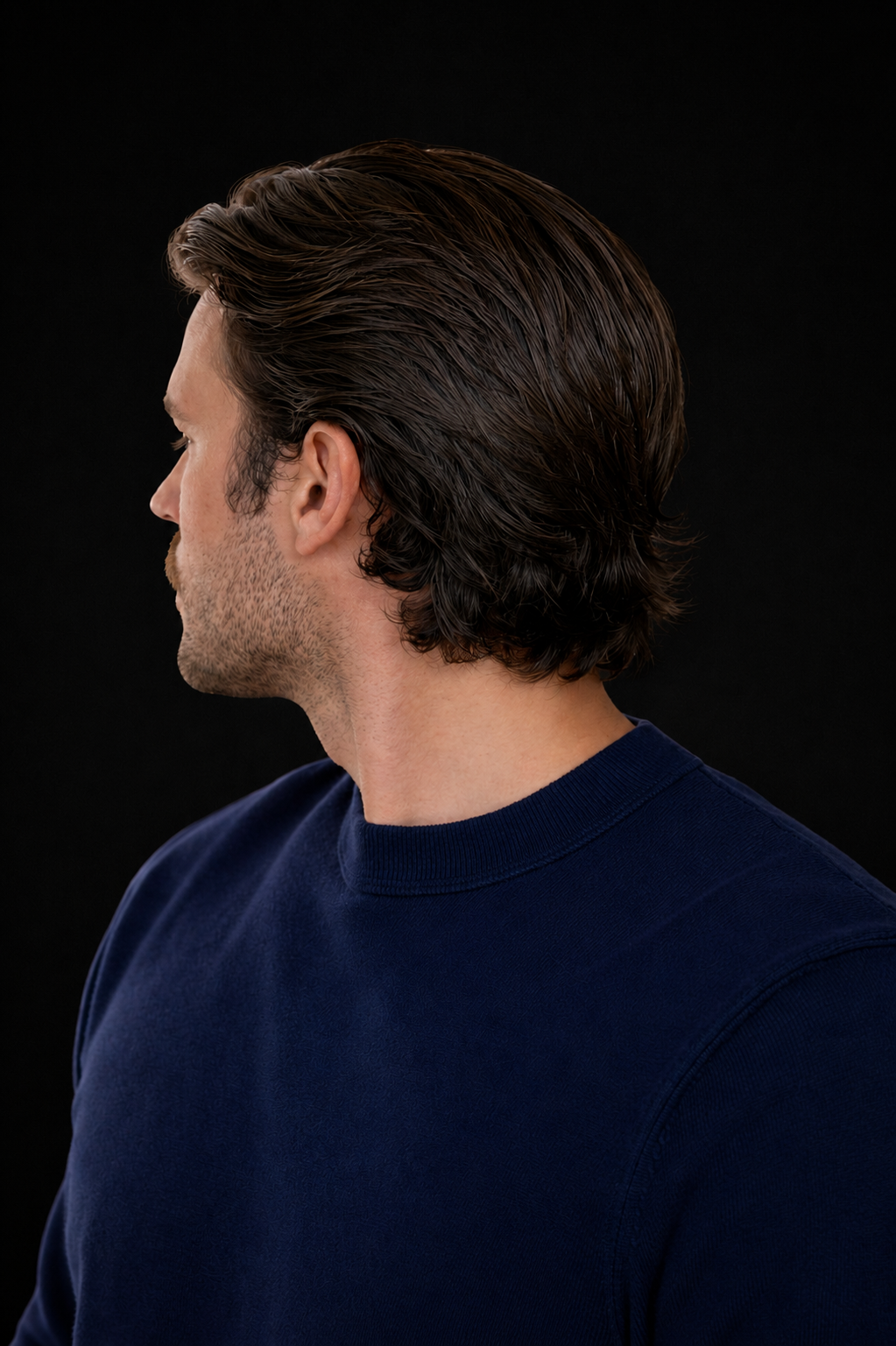
Not every modern men’s haircut needs a fade. Longer scissor cuts offer a different approach, using shape, layers and natural movement rather than relying on short sides for definition.
These styles overlap with the bro flow but can also include longer hair worn behind the ears, loose waves or a swept-back shape.
Who does it suit?
Men who are willing to spend some time on washing, conditioning and styling can enjoy greater versatility. Wavy hair often creates movement naturally, while straight hair may benefit from carefully placed layers to avoid a heavy, flat appearance.
For men with thick hair, internal weight removal can make the haircut easier to manage. For fine hair, excessive layering can reduce the appearance of density, so the barber should use a more conservative approach.
Styling and products
Use a lightweight conditioner and a styling cream that controls flyaways without making the hair stiff. A sea salt spray can add texture to wavy hair, while a heat protectant is important if you regularly blow-dry.
For a swept-back look, dry the hair away from the face. For a relaxed finish, let it fall naturally and use your fingers to shape the layers.
What to tell your barber: “I’d like a medium-to-long scissor cut with natural movement. Please shape the layers around my hair density and keep the overall outline intentional as it grows.”
13. The best men’s hair products: A practical guide
Choosing the right haircut is only part of the process. The product you use at home determines whether you can reproduce the finish your barber created.
Professional product guides generally distinguish styling products by two main properties: hold, which describes how well a product maintains shape, and finish, which describes how shiny or matte the hair looks.
Matte clay
Hold: medium to strong · Finish: matte
Best for textured crops, quiffs, short fades and messy styles. Provides grip and definition without a glossy appearance.
Pomade
Hold: varies · Finish: natural to high shine
Best for slick backs, side parts and traditional pompadours. Water-based versions are generally easier to wash out than traditional oil-based formulas.
Styling paste
Hold: light to strong · Finish: usually natural or matte
A flexible option for crops, side parts and medium-length styles. Exact hold and finish vary by formula.
Sea salt spray
Hold: usually light · Finish: natural to matte
Adds texture and grip before styling. Particularly useful for waves, curtains, bro flow and textured tops. Frequent use can leave some hair feeling dry.
Volumising powder
Hold: light to medium · Finish: generally matte
Useful for root lift and a fuller appearance in fine hair. Apply sparingly to dry hair, because too much can create a powdery or rough feel.
Curl cream and styling cream
Hold: usually light · Finish: natural
Suitable for longer hair, curls and softer styles. Helps control frizz while preserving movement.
How to apply styling products correctly
A frequent mistake is using too much product before understanding what the hair actually needs.
For most short-to-medium men’s hairstyles, begin with a pea-sized amount. Warm the product between your palms, spread it evenly through the hair, and then shape the style with your fingers or a comb. Add a little more only when necessary.
The order matters, too. Sea salt spray and some volumising products are usually used before blow-drying, whereas clay and pomade are often finishing products. Always follow the instructions for the specific product.
The best routine is one that matches your hair, haircut and preferred finish—not one that uses the largest number of products.
14. Men’s haircut predictions for 2027: What could come back?
Predicting men’s haircut trends is not an exact science. Fashion shows, celebrity appearances, social media and barber requests can signal emerging styles, but none can guarantee that a particular cut will dominate the following year.
The following predictions are informed estimates based on the direction of men’s grooming in 2026, including the revival of 1990s styles, softer mullets, tailored short cuts, centre parts and more polished swept-back hair.
Prediction 1: More refined, natural-looking tapers
The taper is likely to remain relevant because it can be adapted to many different hairstyles without requiring an extreme change in length.
My prediction is that more men will request softer transitions and cuts that grow out naturally, particularly when they want a tidy appearance without visiting the barber every week.
How to wear it: Pair a low taper with a textured top, a side part, curls or a medium-length fringe.
Products: Matte paste for texture, styling cream for a softer finish, and pomade for a defined side part.
Prediction 2: The return of classic 1990s men’s hair
The 1990s revival is already visible in men’s grooming coverage. Centre parts, softer layers and relaxed medium-length cuts could become even more common if the nostalgia trend continues into 2027.
The key change will probably be the execution: less rigid styling, more natural texture and shapes adapted to contemporary lifestyles.
How to wear it: Grow the front and sides gradually, ask for subtle layers, and use a lightweight styling cream rather than a heavy, greasy product.
Prediction 3: The modern mullet becomes more wearable
The mullet has already evolved beyond its most exaggerated form. A likely next step is a more subtle version that keeps the characteristic longer back while making the sides and crown easier to manage.
This could make the haircut more accessible to men who want something distinctive without committing to a dramatic silhouette.
How to wear it: Keep the length at the back controlled, maintain texture around the crown and avoid overly disconnected sides unless a bold look is the goal.
Prediction 4: Short, tailored cuts gain renewed appeal
Short haircuts are unlikely to disappear. Buzz cuts, crew cuts and neat scissor cuts offer convenience, are easy to maintain and suit men who prefer a simple routine.
My prediction is that personalised proportions will become more important than the specific name of the haircut. Men may increasingly ask for a short style adjusted to their hairline, head shape and facial hair.
How to wear it: Choose a length that suits your features, keep the neckline intentional, and avoid assuming that the shortest possible cut is automatically the easiest or most flattering.
Prediction 5: Classic side parts and slick backs become more relaxed
Polished men’s hair is likely to remain relevant, particularly for men who prefer a more formal appearance. However, the modern interpretation may continue to move away from rigid, helmet-like styling.
Expect to see more natural volume, softer edges and lower-shine finishes alongside traditional glossy versions.
How to wear it: Use a blow-dryer to create shape first, then apply a small amount of paste or pomade. Let the hair retain some movement instead of fixing every strand in place.
Prediction 6: More individualised cuts for curls and natural texture
A continued emphasis on individual expression could encourage more men to work with their natural curl pattern instead of forcing their hair into a standard shape.
That does not mean every man will choose longer hair. Some will prefer a short curly crop, others a tapered silhouette, and others a longer, layered style.
How to wear it: Choose a cut around the way your hair grows and dries. Use lightweight products that define texture without making the hair stiff or greasy.
What these predictions mean for men
The most useful approach is not to chase every new trend. Choose a haircut that suits your hair, and use trend inspiration to refine its shape or finish.
For barbers, the opportunity is to offer personalised versions of familiar styles rather than relying exclusively on the latest haircut name. A well-executed taper, crop or side part can remain stylish long after a particular social media trend has faded.
15. How to choose the best men’s haircut for your face shape and hair type
The best men’s haircut is the one that works with your natural features and routine. Face shape is one factor, but hair density, growth direction, texture, lifestyle and personal preference are just as important.
Face shape or hair concern Haircuts worth considering What to keep in mind
Round face Textured quiff, structured crop, moderate fade Some height can create a longer visual profile.
Long face Crew cut, soft side part, lower taper Avoid excessive height if you want to balance facial length.
Square face Buzz cut, crew cut, classic taper Strong outlines can complement angular features.
Oval face Most styles, from crops to slick backs Use hair texture and personal preference to guide the choice.
Fine or thinning hair Textured crop, short scissor cut, crew cut Avoid heavy products that flatten the hair.
Thick hair Layered crop, quiff, side part Strategic weight removal can improve manageability.
Curly hair Curly crop, taper, longer natural layers Cut for shrinkage and the hair’s natural curl pattern.
Wavy hair Curtains, bro flow, textured crop Lightweight products can preserve natural movement.
These are starting points rather than rules. For example, a man with a round face can absolutely wear a buzz cut, and a man with a long face can wear a quiff. The important thing is to adapt the proportions to the person rather than treating a face-shape chart as a strict formula.
Five questions to ask before your next haircut
• How much time am I willing to spend styling my hair every morning?
• Do I prefer a matte, natural finish or a more polished, shiny look?
• Does my hair naturally sit forward, backwards, sideways or in curls?
• How often am I willing to visit my barber for maintenance?
• Can I achieve the reference look with my current hair length and density?
Answering these questions before the appointment makes it easier for your barber to recommend a style that is both attractive and realistic.
Frequently asked questions about men’s haircuts in 2026
What is the most popular men’s haircut in 2026?
There is no universally verified number-one haircut for every country. Current men’s grooming coverage highlights textured crops, tapers, fades, tailored buzz cuts, centre parts and modern mullets. The most suitable option depends on personal style, hair type and maintenance preferences.
Are fades still in style in 2026?
Yes. Fades and tapers remain important techniques in men’s barbering. Softer transitions and combinations with natural texture offer alternatives to very high, sharply contrasting fades.
What is the difference between a taper and a fade?
A taper usually focuses on gradually shortening the hair around the temples, sideburns and neckline. A fade typically extends the graduation over a larger area of the sides and back. The exact terminology can vary between barbers.
Which men’s haircut requires the least styling?
A buzz cut is among the easiest cuts to manage daily. A crew cut and a short textured crop can also be practical, although they may require a small amount of product depending on the hair’s growth pattern.
What is the best hair product for men?
There is no single best product for everyone. Matte clay is useful for textured styles, pomade for slick backs and side parts, paste for flexible definition, and styling cream for longer or curlier hair. Choose according to hold, finish and hair type.
Which men’s hairstyles could trend in 2027?
Potential contenders include refined tapers, updated 1990s curtains, softer mullets, tailored short cuts, relaxed slick backs and personalised cuts for natural curls. These are predictions based on current signals, not confirmed future trends.
How often should men get a haircut?
Short fades may need refreshing every one to three weeks for a consistently sharp finish. Many crops and tapers can last three to five weeks, while longer scissor cuts may only need reshaping every six to ten weeks. Hair growth and personal preference determine the best schedule.
How can I explain a haircut to my barber?
Bring two or three reference photographs showing the front, sides and back. Explain what you like about the style, how much time you want to spend styling it, and what you do not want—for example, a fade that is too high or a fringe that is too short.
Final thoughts: Finding the right men’s haircut for 2026 and beyond
Men’s hair trends in 2026 offer something for almost every preference, from precise fades and textured crops to slick backs, relaxed middle parts and longer layered cuts. The strongest approach is to choose a style that complements your hair rather than trying to force your hair into a trend that does not suit it.
Looking towards 2027, classic cuts with updated proportions, natural texture and personalised styling are promising directions to watch. Whether those predictions prove accurate or not, a well-planned haircut, the right product and clear communication with your barber will always matter more than the name of a trend.
At Icon Salon in Amsterdam, the starting point should be a conversation about your hair, your routine and the look you want to achieve. A good haircut should look great when you leave the salon—and still be manageable when you style it yourself.
Ready for a new look? Explore the men’s haircut options at Icon Salon and choose a style that works for you.
Research sources and editorial notes
The article draws on men’s grooming coverage and professional product guidance published in 2026. The following sources are useful for further reading and editorial verification.
GQ — The Best Men’s Hair Trends of 2026
January 16, 2026
Coverage of men’s hairstyle trends, including 1990s nostalgia, centre parts, side parts, modern mullets and tailored buzz cuts.
Read the article
British GQ — The 2026 Hair Trends for Men
July 28, 2026
A visual guide to men’s haircut trends, with input from barbers and hairstylists.
Read the article
Wahl — Most Popular Men’s Hairstyles of 2026
Professional barbering guide
Background on contemporary short cuts, fades, tapers and personalisation in men’s barbering.
Read the guide
CADMEN Academy — Men’s Hair Products: A Barber’s Guide
June 1, 2026
Explains the differences between clay, pomade, paste, gel and sea salt spray.
Read the guide
Moe’s Barbershop — Pomade vs. Clay vs. Wax
September 15, 2026
Practical guidance on product selection, hold, finish and matching styling products to men’s haircuts.
Read the guide
Editorial note: The 2027 section is explicitly predictive. The images throughout this draft are visual reference suggestions and should be checked for accuracy, usage rights and licensing before being published commercially on the Icon Salon website. The article is SEO-oriented, but search ranking cannot be guaranteed; performance will also depend on site quality, indexing, competition, internal links and image optimisation.